Wednesday, 10 June 2026

Qatar Welcomes 3.5 Million Visitors in First Nine Months of 2025

Published: Saturday, October 25, 2025
Qatar Welcomes 3.5 Million Visitors in First Nine Months of 2025

Qatar welcomed 3.5 million visitors between January and September 2025, representing a 2.2% rise compared to the same period last year, according to new data released by Qatar Tourism.

In a statement on Thursday, the tourism authority said that both visitor arrivals and accommodation demand maintained steady growth through the end of the third quarter, as the country gears up for a busy schedule of international events in the final months of 2025 and early 2026.
The report highlighted that Gulf Cooperation Council (GCC) countries continued to be Qatar’s largest source of tourists, accounting for 36% of all arrivals. Europe contributed 25% of total visitors, while Asia and Oceania made up 22%. Notably, arrivals from China increased by 37% and from Australia by 31% in the third quarter alone.

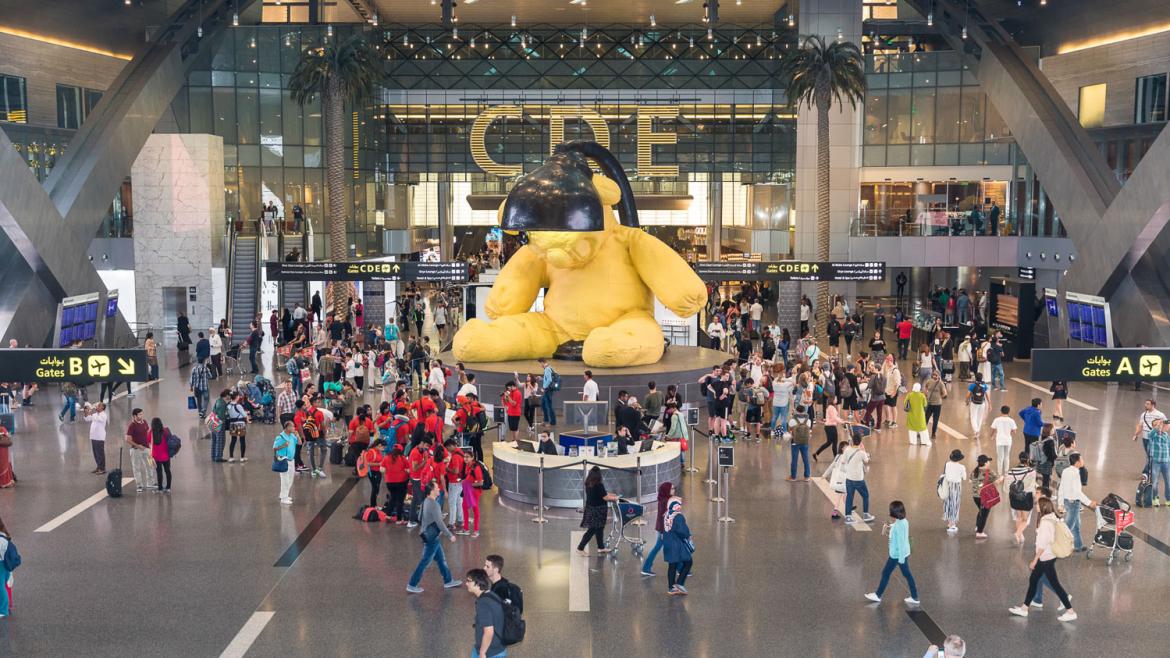
Air travel remained the most common entry point, with 60% of visitors arriving by air, 33% entering by land, and 7% by sea — a sign of Qatar’s growing accessibility across multiple travel channels.

The hospitality sector also performed strongly. The total number of hotel and serviced apartment rooms reached 41,733, while the average occupancy rate rose to 68%, an increase of 2.4 percentage points compared with last year. Room nights sold climbed to 7.7 million, reflecting an 8% year-on-year growth in demand.

Looking ahead, Visit Qatar plans to launch an extensive lineup of events under the Qatar Calendar 2025–2026, featuring major sports tournaments, cultural festivals, and entertainment programs designed to attract both local and international audiences.

Among the key upcoming events are the Doha International Military Music Festival (Doha Tattoo), the T100 Triathlon World Championship Final in Lusail, and the Formula 1 Qatar Grand Prix at the Lusail International Circuit. The Doha Film Festival, organized by the Doha Film Institute, will also return as part of the season’s cultural highlights.
Additionally, Visit Qatar is coordinating with the Local Organizing Committee for Football Events to prepare for a series of global football tournaments, including the FIFA Arab Cup Qatar 2025, FIFA U-17 World Cup Qatar 2025, and FIFA Intercontinental Cup 2025. These competitions will take place in Doha, Lusail, and Al Rayyan, supported by comprehensive plans for stadium operations, fan engagement, accommodation, and media services.

Qatar Tourism emphasized that the steady growth in visitor numbers aligns with the goals of the Third National Development Strategy (2024–2030), which seeks to diversify the national economy and expand cultural, sports, and leisure opportunities for both residents and tourists.

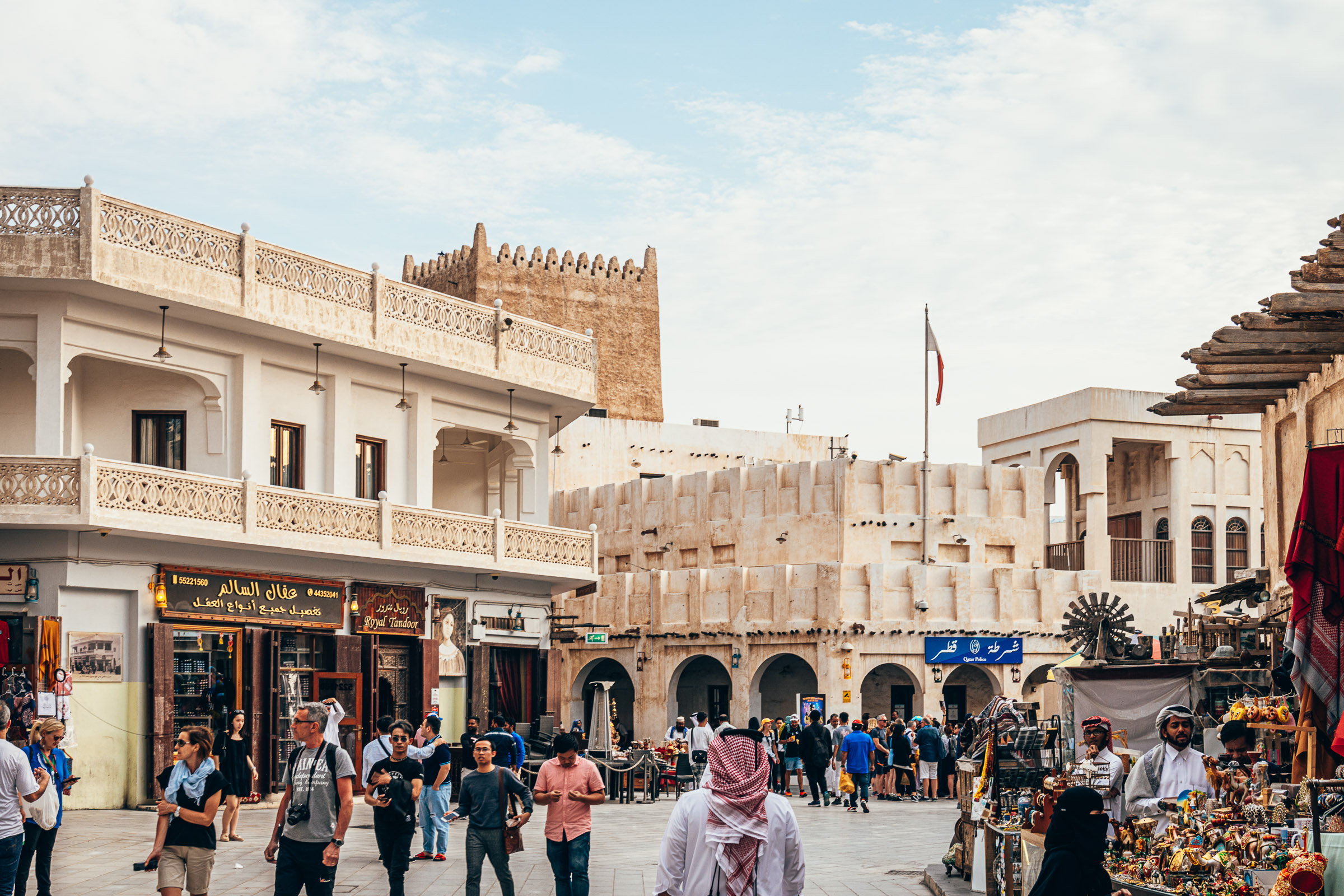
The winter tourism season will extend into 2026, offering a rich cultural program that includes the second editions of Sealine Season 2026 and Brouq Events in Ras Abrouq, along with Art Basel Qatar at the National Museum of Qatar. Food lovers can look forward to the Qatar International Food Festival and the Throwback Food Festival, complemented by ongoing heritage and family activities across Katara Cultural Village, Souq Waqif, and Al Bidda Park.

Dammam Airports Signs $317 Million Infrastructure Development Deals

Published: Wednesday, June 10, 2026
Dammam Airports Signs $317 Million Infrastructure Development Deals

Dammam Airports Company (DACO) has entered into a series of strategic contracts valued at more than SAR 1.2 billion ($317 million) aimed at strengthening infrastructure and operational performance at King Fahd International Airport in Dammam.

The agreements are part of a wider transportation development programme exceeding SAR 3 billion, signed in the presence of Prince Saud bin Nayef bin Abdulaziz, Governor of the Eastern Province.

A major component of the contracts focuses on the development of a new power station along with a medium-voltage electricity distribution system at the airport. The initiative is intended to reinforce the airport’s energy infrastructure and support its long-term operational needs.

DACO stated that these projects align with its broader strategic plan to enhance airport facilities, improve reliability across operations, and accommodate expected growth in passenger volumes and aviation activity in the coming years.

The scope of work also includes the modernisation of King Fahd International Airport’s existing electrical network. This upgrade is expected to improve system resilience, increase capacity, and ensure smoother support for future expansion plans.

In addition, DACO has awarded a separate contract for the rehabilitation of the northern access road to the airport, including the route connecting King Fahd International Airport to Safwa Bridge.

This transport upgrade aims to improve road safety, ease traffic congestion, and provide more efficient access for travellers and airport users.

Source: ZAWYA

RSG Completes Modernisation of AlWajh International Airport in Saudi Arabia

Published: Monday, June 08, 2026
RSG Completes Modernisation of AlWajh International Airport in Saudi Arabia

Red Sea Global (RSG), the developer behind Saudi Arabia’s regenerative tourism destinations The Red Sea and AMAALA, has completed the modernisation of AlWajh International Airport in the country’s northwest.

The airport has now resumed operations, with Saudia operating three weekly flights from Riyadh and two from Jeddah. International services are expected to begin in the near future.

The project represents the first infrastructure delivery completed by RSG under its broadened mandate beyond destination development, reflecting its expanding role in enhancing connectivity, public services, and wider economic growth.

RSG Group CEO John Pagano said the redevelopment goes beyond aviation infrastructure, describing it as a strategic gateway designed to improve mobility, stimulate economic activity, and create new opportunities for communities in the region. He added that residents of Tabuk now have access to an upgraded international-standard airport with improved links across Saudi Arabia and beyond.

The upgraded facility is now capable of accommodating a wide range of commercial aircraft, including Airbus A320 and Boeing 737 families, as well as seaplanes. Its annual passenger capacity has increased to 500,000, up from 100,000 previously, with the ability to handle up to 330 passengers per hour across four gates during peak periods.

According to the company, the expansion is expected to support rising demand, strengthen tourism development, and contribute to job creation and broader economic activity across the Tabuk region.

Abdulaziz Al-Abdan, Executive Director of Aviation and Airport Operations at Red Sea Global, said the improvements significantly expand capacity for larger aircraft and higher passenger volumes. He added that discussions are already underway with airline partners and regulators to further develop future route networks in line with expected demand growth.

The airport is also set to function as a key entry point for AMAALA, the luxury wellness destination located about 45 minutes away by electric vehicle and roughly 20 minutes by seaplane.

Architectural design elements of the renovated terminal draw on the heritage of AlWajh’s historic town and the broader Tabuk coastline, aiming to reflect the region’s cultural identity.

Additional upgrades include enhanced passenger facilities such as premium lounges, cafés, a mini-market, automated banking services, car rental desks, and expanded parking. The terminal has also been equipped to support seaplane and helicopter operations as part of future transport links to AMAALA.

Source: ZAWYA

China Launches 80 New International Air Cargo Routes in First Five Months of 2026

Published: Sunday, June 07, 2026
China Launches 80 New International Air Cargo Routes in First Five Months of 2026

China added 80 new international air cargo routes during the first five months of 2026, according to data released by the Air Logistics Committee of the China Federation of Logistics & Purchasing (CFLP) as of May 31.

The expansion was largely focused on Europe and Asia. Of the newly established routes, 35 connect China with destinations across Europe, while 33 serve Asian markets. Ten routes were launched to North America, with one route each linking China to South America and Africa.

In May alone, 11 new international air cargo routes entered service, including seven connecting China with other Asian countries, three serving European destinations, and one linking to North America.

The new routes are primarily used to transport cross-border e-commerce shipments, advanced manufactured products, high-value goods, and fresh agricultural produce.

Industry experts say the continued growth of China's international air freight network is helping diversify transportation options and support export-driven industries. Peng Chun, Deputy Director of the Department of Logistics Management at Beijing Jiaotong University, noted that the expanded network helps reduce pressure on maritime and rail freight services while providing faster logistics solutions for high-value exports.

Peng added that the increase in international cargo routes also strengthens China's transportation resilience and contributes to greater supply chain security by enhancing independent logistics capabilities.

Source: CGTN

Bahrain Airport Operations Continue as Airspace Stays Open

Published: Saturday, June 06, 2026
Bahrain Airport Operations Continue as Airspace Stays Open

Bahrain International Airport has confirmed that the kingdom’s airspace remains open and that flight operations continue as normal, reaffirming Bahrain’s connectivity with destinations worldwide.

In a statement shared on X, the airport said its team remains focused on providing a smooth travel experience for passengers while maintaining regular flight services.

The update came after an Air India Express flight scheduled to operate from Kochi to Bahrain was cancelled on Thursday morning. The cancellation left 122 passengers stranded in Kochi.

Because the aircraft did not arrive in Bahrain, the return service from Bahrain to Kochi, scheduled to depart at 3pm, was also cancelled. The disruption affected an additional 178 passengers.

According to an airline official quoted by the Gulf Daily News (GDN), affected travelers were offered the choice of receiving a full refund or being rebooked on the next available flight.

Airport authorities have not reported any restrictions to Bahrain’s airspace, and flight operations continue across the kingdom’s aviation network.

Source: ZAWYA

Brussels Airport to Keep Electronics and Liquids in Hand Luggage With New Scanners

Published: Wednesday, June 03, 2026
Brussels Airport to Keep Electronics and Liquids in Hand Luggage With New Scanners

Passengers at Brussels Airport will no longer need to remove liquids or electronic devices from their hand luggage during security checks, the airport announced on Friday as part of a major modernization of its security screening system.

The revamp at the Zaventem airport will take place over the next several years, with the first new scanners expected to be operational in 2028. By 2029, the entire departure security system will be replaced with cutting-edge technology, including CT scanners for hand luggage and advanced body scanners for passengers.

“The safety of our passengers and staff is always our top priority,” said Brussels Airport CEO Arnaud Feist. “With this new technology, we will not only maintain the highest safety standards but also make security screening faster and more convenient for travelers.”

Currently, passengers must remove laptops, tablets, and other electronic devices from their bags, and liquids are limited to one litre in containers no larger than 100 millilitres. The new CT scanners will allow these items to remain in hand luggage, and under European regulations, passengers will be allowed to carry up to two litres of liquids per bag.

A test of a new body scanner is scheduled for June, with the construction of an additional temporary screening platform planned in 2027 to accommodate the new technology. Once the first scanners are operational in 2028, phased upgrades of all 19 departure lanes will be completed by summer 2029. Transfer passenger lanes will be upgraded at a later stage.

Feist emphasized that the new scanners will also increase security screening capacity, preparing the airport for future growth in passenger numbers.

The initiative is part of Brussels Airport’s Hub 3.0 program, designed to enhance passenger experience and maintain the airport as a “convenient, comfortable, and future-proof European hub.” Similar CT scanner systems are already in operation at major European airports such as London Heathrow, Amsterdam Schiphol, Dublin, Rome Fiumicino, and Frankfurt.