Wednesday, 10 June 2026

Qatar Welcomes 3.5 Million Visitors in First Nine Months of 2025

Published: Saturday, October 25, 2025
Qatar Welcomes 3.5 Million Visitors in First Nine Months of 2025

Qatar welcomed 3.5 million visitors between January and September 2025, representing a 2.2% rise compared to the same period last year, according to new data released by Qatar Tourism.

In a statement on Thursday, the tourism authority said that both visitor arrivals and accommodation demand maintained steady growth through the end of the third quarter, as the country gears up for a busy schedule of international events in the final months of 2025 and early 2026.
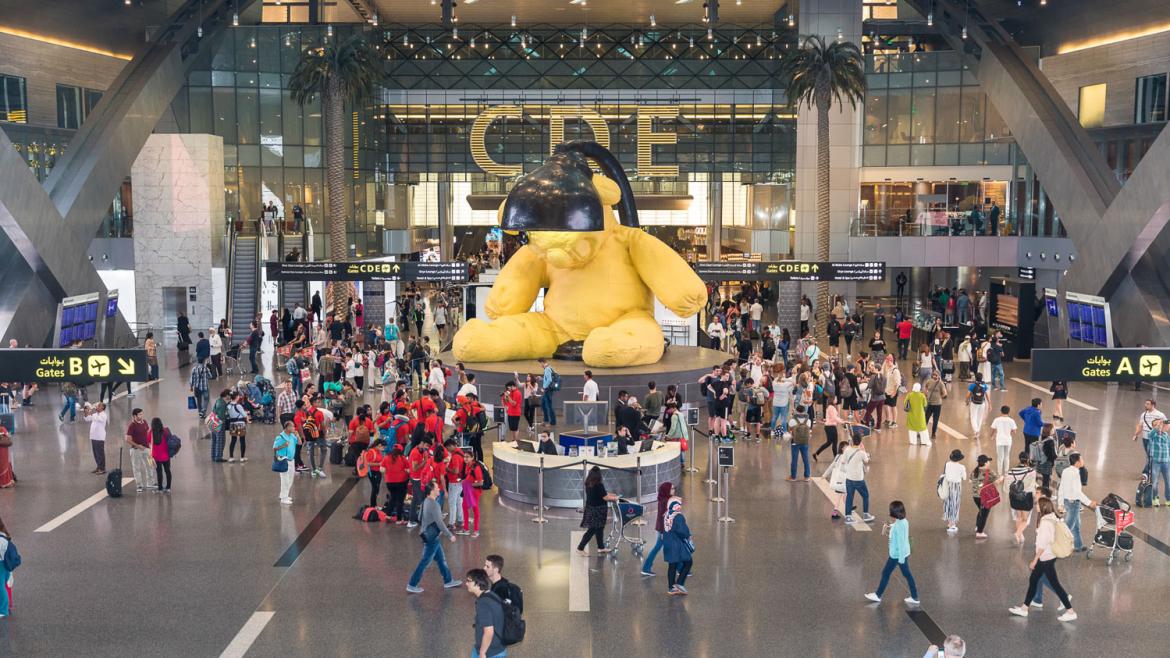
The report highlighted that Gulf Cooperation Council (GCC) countries continued to be Qatar’s largest source of tourists, accounting for 36% of all arrivals. Europe contributed 25% of total visitors, while Asia and Oceania made up 22%. Notably, arrivals from China increased by 37% and from Australia by 31% in the third quarter alone.

Air travel remained the most common entry point, with 60% of visitors arriving by air, 33% entering by land, and 7% by sea — a sign of Qatar’s growing accessibility across multiple travel channels.

The hospitality sector also performed strongly. The total number of hotel and serviced apartment rooms reached 41,733, while the average occupancy rate rose to 68%, an increase of 2.4 percentage points compared with last year. Room nights sold climbed to 7.7 million, reflecting an 8% year-on-year growth in demand.

Looking ahead, Visit Qatar plans to launch an extensive lineup of events under the Qatar Calendar 2025–2026, featuring major sports tournaments, cultural festivals, and entertainment programs designed to attract both local and international audiences.

Among the key upcoming events are the Doha International Military Music Festival (Doha Tattoo), the T100 Triathlon World Championship Final in Lusail, and the Formula 1 Qatar Grand Prix at the Lusail International Circuit. The Doha Film Festival, organized by the Doha Film Institute, will also return as part of the season’s cultural highlights.

Additionally, Visit Qatar is coordinating with the Local Organizing Committee for Football Events to prepare for a series of global football tournaments, including the FIFA Arab Cup Qatar 2025, FIFA U-17 World Cup Qatar 2025, and FIFA Intercontinental Cup 2025. These competitions will take place in Doha, Lusail, and Al Rayyan, supported by comprehensive plans for stadium operations, fan engagement, accommodation, and media services.

Qatar Tourism emphasized that the steady growth in visitor numbers aligns with the goals of the Third National Development Strategy (2024–2030), which seeks to diversify the national economy and expand cultural, sports, and leisure opportunities for both residents and tourists.

The winter tourism season will extend into 2026, offering a rich cultural program that includes the second editions of Sealine Season 2026 and Brouq Events in Ras Abrouq, along with Art Basel Qatar at the National Museum of Qatar. Food lovers can look forward to the Qatar International Food Festival and the Throwback Food Festival, complemented by ongoing heritage and family activities across Katara Cultural Village, Souq Waqif, and Al Bidda Park.

flynas Expands Saudi Network with New Qassim Operations Base

Published: Wednesday, June 10, 2026
flynas Expands Saudi Network with New Qassim Operations Base

Saudi carrier flynas has announced the establishment of a new operational base at Prince Naif bin Abdulaziz International Airport in Qassim, in collaboration with airport operator Cluster2 Company. The development makes flynas the first Saudi airline to operate from six different hubs across the Kingdom.

The expansion will begin in July with the launch of the first phase, introducing direct services to five destinations covering both domestic and international routes.

On the international front, flynas will operate direct flights from Qassim to Istanbul, Trabzon, and Cairo’s Sphinx International Airport. The network will also include domestic connections to Abha and Dammam.

The airline said the new base is part of its broader strategy to strengthen its presence across Saudi Arabia and enhance connectivity between regional airports and key global destinations.

Eng. Ali Masrahi, Chief Executive Officer of Cluster2 Company, said the launch represents an important milestone in the organisation’s strategy to expand partnerships and develop wider operational networks across the Kingdom.

He added that the initiative is designed to leverage growing passenger demand and support the introduction of new domestic and international routes, aligning with the objectives of Saudi Arabia’s National Transport and Logistics Strategy, which aims to handle 330 million passengers annually by 2030.

Source: ZAWYA

Airlines in Middle East Forecast to Slip Into Losses on War and Fuel Pressures

Published: Wednesday, June 10, 2026
Airlines in Middle East Forecast to Slip Into Losses on War and Fuel Pressures

Airlines operating in the Middle East are projected to move into collective losses in 2026 as escalating regional tensions, restricted airspace access and sharply higher fuel costs place significant strain on the sector, according to the latest outlook from the International Air Transport Association (IATA).

The industry body said that while carriers in other regions are also expected to see weaker profitability, the Middle East is likely to be the only region to post an overall net loss.

Across the global aviation industry, profits are expected to fall substantially. IATA forecasts net earnings declining from $45 billion in 2025 to $23 billion in 2026, with profit margins narrowing from 4.2 per cent to 2.0 per cent.

Willie Walsh, Director General of IATA, said the outlook has deteriorated due to conflict-related disruption in the Middle East and a significant rise in fuel costs. He noted that jet fuel prices have increased by nearly 70 per cent globally, forcing airlines to absorb higher operating expenses despite ongoing efficiency improvements and fare adjustments.

Walsh added that while all regions remain profitable, performance has weakened sharply across the board, except for the Middle East. He said Gulf carriers are operating under considerable uncertainty following major airspace disruptions linked to the onset of conflict, though they continue to maintain global connectivity despite financial pressure.

IATA estimates that global fuel expenditure will rise from $252 billion in 2025 to $350 billion in 2026, accounting for more than 31 per cent of total airline operating costs, compared with 25.4 per cent the previous year.

The projection is based on an average Brent crude price of $95 per barrel in 2026, up from $69 in 2025. Jet fuel is expected to average $152 per barrel, significantly higher than the previous year, while the spread between crude and jet fuel prices is expected to remain elevated.

Although airlines are hedging roughly one-third of their fuel needs, IATA warned that carriers remain exposed to sustained price increases and high refining margins.

Overall fuel consumption is forecast to remain steady at about 104 billion gallons in 2026, meaning that higher fuel prices are the primary driver of rising industry costs.

Walsh also highlighted that the sector’s financial resilience is under pressure, with average net profit per passenger expected to fall to $4.50, nearly half of the level recorded in 2025.

The Middle East is expected to be the most affected region, as geopolitical instability leads to capacity reductions, flight disruptions, and higher operating costs. Reduced transit traffic is also weighing on load factors, further increasing unit costs for airlines.

Despite these challenges, IATA said Gulf carriers continue to work to sustain global connectivity, even as financial headwinds intensify across the region.

Source: ZAWYA

Emirates SkyCargo Expands Operations with New Almaty Cargo Service

Published: Wednesday, June 10, 2026
Emirates SkyCargo Expands Operations with New Almaty Cargo Service

Emirates SkyCargo, the freight arm of Emirates, has announced the launch of a new weekly dedicated freighter service to Almaty International Airport in Kazakhstan, with operations scheduled to begin on 16 June 2026.

The introduction of the Boeing 777F service marks the carrier’s first cargo destination in Central Asia. Operating from Dubai, the new route is expected to create a direct trade corridor that integrates the region more closely into Emirates SkyCargo’s global logistics network.

Almaty, Kazakhstan’s largest city, is emerging as a key commercial and logistics centre, serving as an important gateway for trade across Central Asia. The weekly Tuesday freighter service will offer more than 100 tonnes of cargo capacity each week, enabling the transport of goods such as electronics, perishable items, machinery, and other consumer products between Almaty and international markets via Dubai.

Badr Abbas, Divisional Senior Vice President of Emirates SkyCargo, said the new service aligns with the company’s role in facilitating global trade and reflects its strategy to expand into high-growth regions. He noted that Central Asia is experiencing strong economic development and that the new route will provide businesses in the region with improved access to international markets.

He added that the service will also enhance connectivity for global customers seeking efficient wide-body cargo solutions into a strategically important market, while supporting Dubai’s broader economic objectives under the D33 agenda and reinforcing its position as a global logistics hub.

Emirates SkyCargo continues to expand its freighter fleet in response to rising global demand. Since March 2026, the carrier has received four new Boeing 777 freighters, with six additional aircraft scheduled for delivery later in the year as part of its ongoing network expansion strategy.

Source: ZAWYA

Riyadh Air Adds Dubai, Cairo, Madrid, Manchester and Jeddah Routes

Published: Wednesday, June 10, 2026
Riyadh Air Adds Dubai, Cairo, Madrid, Manchester and Jeddah Routes

Riyadh Air has announced the addition of five new destinations to its growing network, marking another milestone in the airline’s expansion strategy as it prepares for full-scale operations.

The Saudi carrier, owned by the Public Investment Fund (PIF), revealed on Monday that it will begin serving Cairo, Dubai, Jeddah, Madrid, and Manchester. The announcement coincides with the arrival of the first three Boeing 787-9 Dreamliner aircraft that will form part of the airline’s modern fleet.

According to the airline, the newly introduced routes are intended to strengthen links between Riyadh and key economic, tourism, and cultural centres across the region and beyond. Riyadh Air added that further destinations are expected to be announced in the coming weeks as it continues to expand its network.

The latest route launch follows the delivery of the carrier’s third aircraft, which arrived in Saudi Arabia on Monday. The addition is expected to enhance operational preparedness and support Riyadh Air’s long-term objective of connecting the Saudi capital with more than 100 destinations worldwide by 2030.

Services to Jeddah are scheduled to commence on June 14, followed by Dubai on June 18 and Cairo on June 25. Flights to Madrid are set to begin on July 17, while Manchester services will start on July 23.

The airline also confirmed that it has brought forward the launch of its inaugural London route from July 1 to June 10, 2026, following the earlier-than-expected delivery of new aircraft. Ticket sales through the carrier’s official channels are due to open later on Monday.

Riyadh Air said its Boeing 787-9 fleet will feature advanced cabin technology, upgraded onboard amenities and hospitality services designed to meet international standards, aiming to provide passengers with a premium travel experience.

Source: ZAWYA

Emirates and Real Madrid Renew Long-Standing Partnership Through 2031

Published: Tuesday, June 09, 2026
Emirates and Real Madrid Renew Long-Standing Partnership Through 2031

Emirates and Real Madrid CF have agreed to extend their partnership until 2031, continuing one of the most high-profile sponsorship relationships in global football and reinforcing a collaboration that will span nearly two decades.

The airline has been associated with the Spanish club since 2011, with the partnership elevated in 2013 when Emirates became the official jersey sponsor. Under the renewed agreement, Emirates will remain the Official Main Sponsor and Official Airline Partner for both the men’s and women’s teams.

Its branding will continue to feature prominently on match jerseys, training gear, and staff apparel across major competitions, including La Liga, the UEFA Champions League, Copa del Rey, and the Spanish Super Cup. The renewed deal also secures the distinction of being the longest-running jersey sponsorship in La Liga history.

Beyond kit sponsorship, the agreement includes expanded brand presence at the Santiago Bernabéu Stadium, access to club training facilities, and continued use of the Emirates Lounge, a premium hospitality space designed for guests, partners, and customers. The collaboration also extends to Real Madrid’s youth system, supporting player development at grassroots level.

In addition, Emirates will maintain and deepen its involvement in basketball through a separate multi-year extension, under which it will serve as the Official Main Sponsor of Real Madrid’s basketball team until 2031.

Boutros Boutros, Executive Vice President for Corporate Communications, Marketing and Brand at Emirates, said the partnership reflects the airline’s long-standing engagement with football and its global fan base.

He highlighted that the collaboration has helped bring supporters closer to the sport through exclusive experiences and global fan engagement initiatives, while also strengthening Emirates’ presence in Spain.

Since launching its first flight to Madrid in 2010, Emirates has expanded its operations in the Spanish market, now operating five daily services across Madrid and Barcelona. The airline has also broadened its global connectivity via Dubai and introduced updated onboard products for passengers travelling to and from Spain.

Real Madrid President Florentino Pérez described the renewed agreement as a continuation of a strong and enduring relationship built over many successful years, noting the shared achievements between the two organisations.

Over the course of their partnership, Emirates and Real Madrid have collaborated on a range of marketing and fan engagement initiatives, including specially branded aircraft liveries, player-themed aircraft decals, matchday activations, and exclusive supporter experiences.

Emirates has also deployed dedicated aircraft for club-related charter operations, including Boeing 777 aircraft used for Spanish Super Cup travel between Madrid and Jeddah.

The airline maintains a broad portfolio of football sponsorships, which includes partnerships with Arsenal FC, AC Milan, Real Madrid CF, S.L. Benfica, and Olympique Lyonnais, along with a Platinum Partnership with FC Bayern Munich. It also serves as title sponsor of the Emirates FA Cup and supports the UAE Pro League.

Beyond football, Emirates’ global sponsorship strategy spans multiple sports, including tennis, rugby, basketball, sailing, cycling, golf, horse racing, cricket, and Australian Rules Football. The airline says its portfolio is designed to connect international audiences with major sporting events, clubs, and competitions worldwide.

Source: ZAWYA